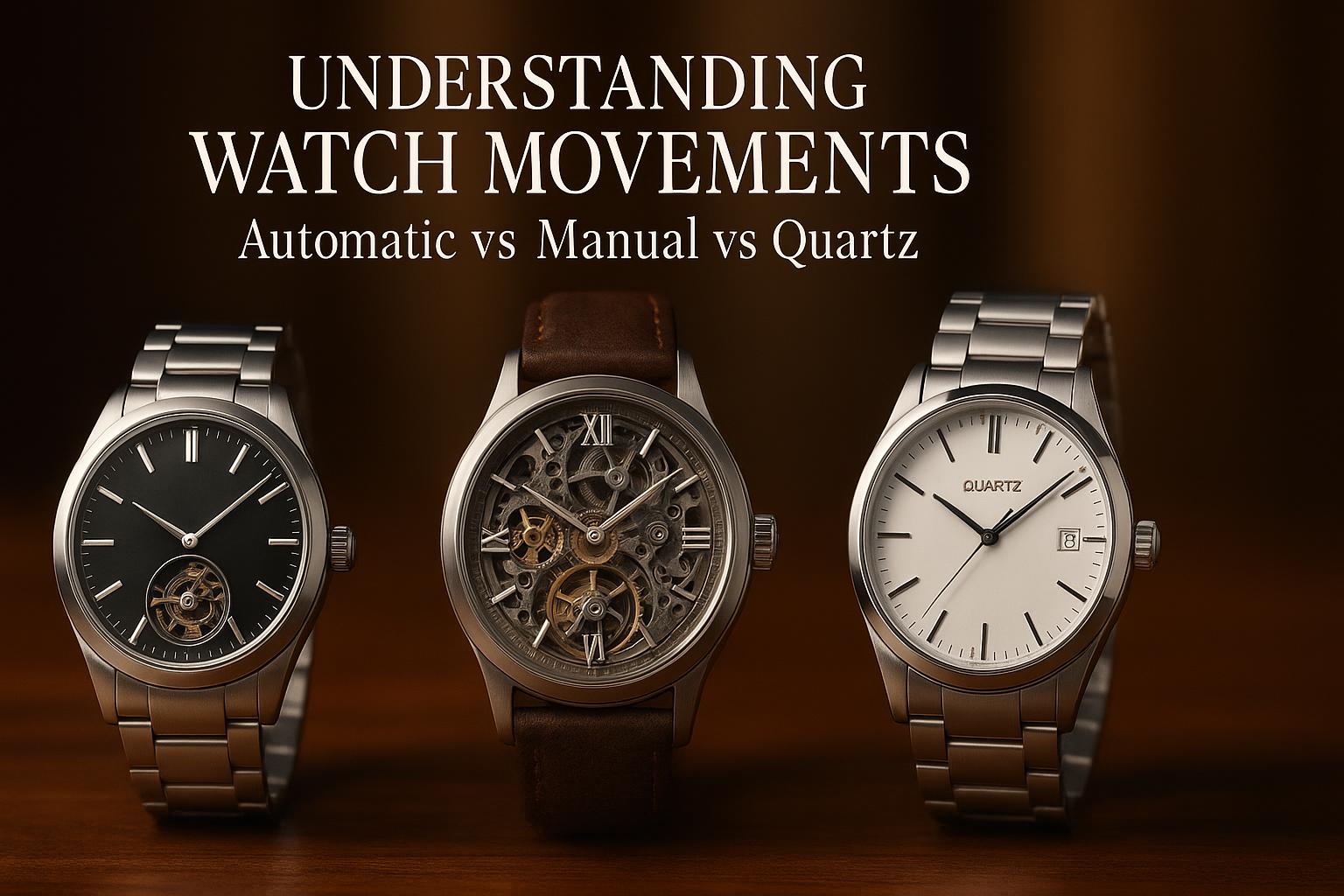
Understanding Watch Movements: Automatic vs Manual vs Quartz
Admin
Watch Enthusiast
The movement is the heart of any watch. Understanding the differences between movement types is essential for making the right purchase decision.
Automatic Movements
Automatic (self-winding) movements use a rotor that spins with wrist motion to wind the mainspring. They offer the craftsmanship appeal of mechanical watchmaking without daily winding requirements.
Pros: No battery needed, craftsmanship appeal, smooth sweeping seconds hand
Cons: Less accurate than quartz, requires servicing every 5-7 years, higher cost
Notable Examples: Rolex Caliber 3235, Omega Co-Axial 8900, ETA 2824
Manual Movements
Manual (hand-wound) movements require daily winding through the crown. They are often thinner than automatics and offer a traditional horological experience.
Pros: Thinner profiles possible, traditional appeal, connection to the watch
Cons: Requires daily attention, less convenient
Notable Examples: Omega Caliber 1861 (Speedmaster), Patek Philippe 215 PS
Quartz Movements
Quartz movements use a battery-powered quartz crystal oscillator for timekeeping. They offer superior accuracy at lower costs.
Pros: Highly accurate, low maintenance, affordable
Cons: Battery replacement needed, less prestige in luxury segment
Notable Examples: Grand Seiko 9F, Breitling SuperQuartz, Longines VHP
Admin
The Watch.hk editorial team brings together watch enthusiasts, collectors, and industry experts to deliver comprehensive coverage of the world of horology.
View all articlesComments (5)
Login to join the conversation
LoginGreat article! This helped me a lot when I was deciding on my first Omega. The size guide was especially useful.
I wish I had read this before buying my first watch. Would have saved me from a few mistakes!
Very comprehensive guide. Can you do a similar article for women's watches?