Know your movement
Mechanical, quartz or Spring Drive: understand what is doing the timekeeping before you compare the dial.
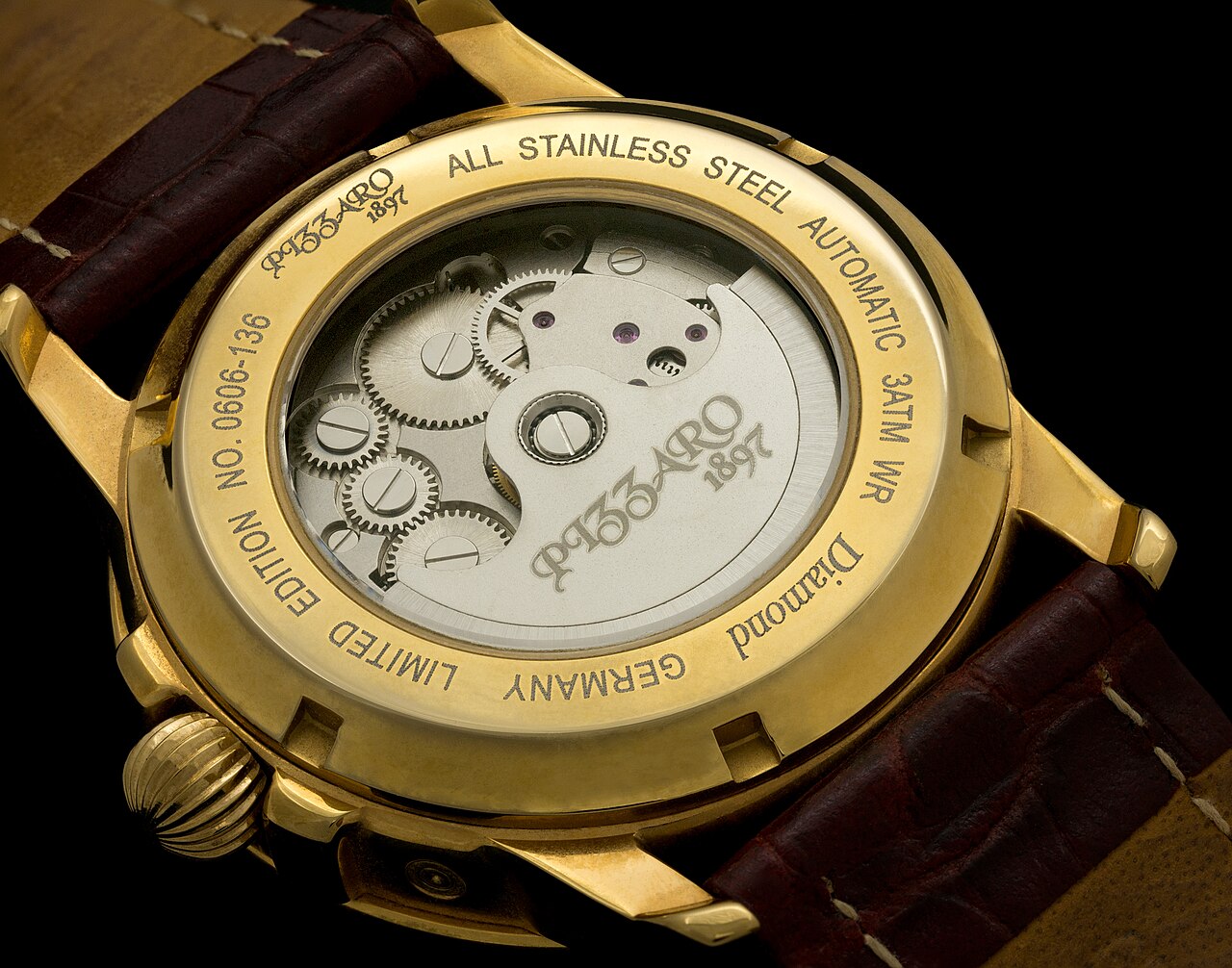
A movement is the mechanism inside the case that keeps time and drives the hands. Its architecture changes how you use a watch, how often it needs attention and what a sensible service conversation looks like. Start with the exact reference and its manufacturer’s instructions rather than treating every watch from one brand alike.
A manual mechanical movement stores energy in a mainspring that you wind through the crown. A gear train delivers that energy to an escapement and an oscillating balance. Winding is part of ownership, but more force is not better: follow the model’s instructions and do not force a crown that has reached its stop.
An automatic mechanical movement adds a rotor that winds the mainspring as the watch moves. You may still need to wind or reset it after a period off the wrist. Power reserve describes approximately how long a fully wound movement can run, not a promise that casual wear always supplies a full charge. An automatic watch can stop without anything being wrong.
In a conventional quartz watch, a battery powers an electronic oscillator. Quartz watches are often more accurate than ordinary mechanical watches, but specifications differ. A stopped battery-powered watch needs prompt attention rather than indefinite storage with an exhausted cell inside. Some electronic watches use rechargeable cells or solar charging; these need different care.
Spring Drive combines a mainspring power source with electronic regulation. It is not simply another name for an ordinary automatic movement or a battery quartz movement. The SBGA211 in our reference library uses a self-winding Spring Drive calibre; read its specific winding, accuracy and service instructions.
Choose for the routine you actually enjoy. A hand-wound chronograph invites regular interaction; quartz can suit rotation and low daily involvement; an automatic can fit consistent wear. None removes the need for seals, lubrication or periodic inspection. Compare service availability and ownership expectations alongside the specification sheet.
General educational guidance, not authentication, investment or individual repair advice. Follow the instructions for your exact watch.
Explore the watch library